
Feedback in the Workplace Guides & Articles
Explore our best guides on feedback at work — from 360-degree reviews to free training activities.
These expert resources help HR leaders, team trainers, and people managers improve workplace communication,
build trust, and foster growth-focused feedback cultures.
Looking for ready-made materials? Explore our editable Giving Feedback Training Course Kit for HR professionals and trainers.
What You’ll Find in These Feedback Guides
- ✔️ Tips on giving positive and constructive feedback
- ✔️ Real-world examples and mistakes to avoid
- ✔️ Free training activities and PowerPoint slides
- ✔️ Exit interview strategies and 360-degree feedback explained
Explore Our Feedback Training Guides

What Is 360-Degree Feedback and Why It Matters in the Workplace
As a manager, it can be extremely useful to use 360-degree feedback and in this post I explain what it is and how to use it effectively.
Learn what 360-degree feedback is for the workplace →

Feedback Training PowerPoint Slides: Examples & What to Include
Struggling to teach feedback that truly sticks? These PowerPoint slides offer a structured, visual way to train staff in giving and receiving effective feedback, helping you save time and increase engagement in your sessions.
Take a look at the complete feedback training slide deck →

Feedback Sandwich Technique: 3 Easy Steps for Effective Workplace Communication
What is the best and most effective way to provide employees with feedback as a manager?
Learn the feedback sandwich technique in 3 steps →

How Do Feedback Loops Improve Workplace Communication?
Are your team’s actions actually improving over time? Feedback loops turn insights into progress — whether it’s praise or correction. Learn how to use the 5-step loop to create a culture of continuous improvement.
Explore how feedback loops can improve team performance →

10 Examples of Bad Feedback (and How to Make Them Constructive)
Poor feedback can leave employees confused, defensive, or demotivated. This guide examines 10 common feedback mistakes and shows how managers can make their comments more specific, supportive, and effective.
Learn how to make feedback more constructive →

18 Characteristics of Good Feedback in the Workplace
What separates helpful feedback from the kind that gets ignored? From clarity to compassion, these 18 traits show how to make feedback meaningful, actionable, and growth-focused in any professional setting.
See all 18 characteristics of good feedback →

21 Tips for Giving Positive Feedback in the Workplace
21 tips on how to give positive feedback as a manager or team leader including to be a good listener, embrace innovative thinking, and to highlight specific strengths.
See 21 positive feedback at work tips →

10 Employee Feedback Training Activities (Free Examples for HR, Managers & Trainers)
Giving feedback effectively can motivate employees, support development, and improve workplace relationships. Poorly delivered feedback, however, can lower morale. These 10 free feedback training activities can be used online or in classroom workshops.
See the 10 Feedback training activities →

Feedback Skills Training Materials for Giving & Receiving Feedback
Training materials for managers and trainers to teach constructive, confident feedback that strengthens performance, communication, and workplace relationships.

Exit Interviews: Benefits, Best Practices & 20 Questions for HR
Worried about high staff turnover? Exit interviews offer powerful insights into what’s driving employees away, and how to fix it. They also strengthen your brand and improve employee experience when done right.
Learn how exit interviews can transform your workplace culture →

Constructive Feedback Training Activity: 8 Steps for Giving Feedback Effectively to Employees
Free training activity for teaching employee feedback and how to give constructive feedback as a manager or employee in the workplace.
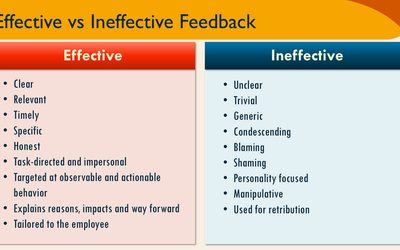
Effective vs Ineffective Feedback: What Works (and What Doesn’t) at Work
Is the feedback you are giving being understood and acted on? What does effective feedback involve?
Find out the differences between good & bad feedback →

How to Give Effective Feedback – Day 5 Trainers Bootcamp
Tips on giving effective feedback and how to get feedback as a freelance or corporate trainer from participants, learners, and students.

10 Essential Principles for Effective Feedback in the Workplace
What is effective feedback and what are the key principles and ideas for providing it? Here are 10 key principles including the need to base it on behavior rather than personality, keep it controllable, communicated clearly, specific, and well-timed.
Read about the principles of effective feedback →

Balancing Positive and Constructive Feedback Activity for Training Sessions
Use this free training activity for employee training when teaching how to give constructive and positive feedback in the workplace.
Start using the free feedback training activity →
Why Feedback Matters in Today’s Workplace
In the workplace, as a trainer, feedback is incredibly useful for the individual, the team, and the company’s success. Promoting open and respectful feedback creates not only stronger performance management but also helps you develop a culture of trust and collaboration. In doing so, you begin to establish an employee feedback culture that encourages growth and learning across the organization.
When employees feel psychologically safe to both give and receive constructive input, they are far more likely to grow and thrive in their role and within the team. This is where feedback drives continuous improvement, becoming more than a one-off exchange — it becomes part of the everyday learning environment. Employees feel comfortable sharing ideas, are not afraid of making mistakes, and they build confidence while becoming more accountable for their work.
Feedback can also play a vital role in your company’s wider learning and development (L&D) strategy. When done well, feedback provides a strong foundation for employee engagement by ensuring that staff feel valued and supported. It links workplace communication skills with performance goals, creating a cycle of ongoing development.
Many managers, unfortunately, still tend to see feedback as a one-way task — something only given to employees when work is not being completed efficiently or effectively. On the contrary, feedback can and should be two-way (or even 360-degree feedback), and it can be extremely useful to guide employees while also supporting manager development. For leaders, feedback is a powerful tool to improve coaching skills, strengthen communication, and build more productive teams.
Looking for more training topics? Explore our full Workplace Training Hub →