A communication skills training session plan is a structured outline that helps trainers, HR professionals, and managers organize a communication workshop or workplace communication training session. It typically includes an introduction, communication activities, role-play scenarios, group discussion, and reflection to help participants develop practical communication skills.

A typical communication skills training session includes:
- An icebreaker or discussion activity
- A short introduction to communication skills
- Interactive activities or role-play scenarios
- Group discussion and reflection
- Action planning and next steps
You can use the communication training session plan template below to design a structured and engaging communication skills workshop for the workplace.
What Is a Communication Skills Training Session Plan?
A communication skills training session plan is a roadmap that helps you organize a training session into clear sections in a logical order.
A communication training session plan is an outline that helps you deliver a communication workshop in a clear, logical, and engaging way. It is very useful if you are a trainer, HR professional, manager, or facilitator.
This kind of planning helps ensure the workshop has clear sections, so the training is structured and practical, with the right balance of theory, discussions, and activities presented in a logical sequence.
A plan also helps you manage timing, which can be difficult without a clear structure.
A communication skills training session plan typically includes:
- Introduction and objectives
- Icebreakers or discussion activities
- Communication skills input
- Practical exercises and role plays
- Group discussion and reflection
- Action planning and next steps
A communication skills training session plan is sometimes also called a communication training agenda, a communication workshop plan, a communication skills lesson plan, or a communication training course outline. These terms are often used interchangeably in workplace training, leadership development, and professional development programs.
These types of session plans are used whenever communication skills are being taught in the workplace. For example, communication skills training is often included in leadership development, management training, team workshops, conflict management training, customer service training, and other workplace training programs where people need to communicate clearly and work well together.
Whether you are running a short 1-hour communication workshop or a full-day communication skills training course, having a clear communication training session plan makes the session more structured, engaging, and effective.
What Should a Communication Skills Training Session Include?
A communication skills training workshop should include a mix of discussion, short input, practice, and reflection so that participants can understand, practice, and apply communication skills.
Many communication training sessions are not very effective because they include too much theory and not enough practice, or too many activities without clear learning points.
A typical communication skills training session includes the following stages:
1. Introduction and Objectives
At the start of the communication training session, the trainer should explain the objectives of the session, what participants will learn, and how the session will be structured. This helps participants understand what to expect and why the training is relevant to their work.
A clear introduction also helps participants focus on the purpose of the session and understand how the different activities and discussions will link to real workplace communication.
2. Icebreaker or Discussion Activity
Most communication skills workshops start with a short icebreaker or discussion activity related to communication. This helps participants start thinking about communication problems, communication styles, or communication challenges in the workplace and gets people talking early in the session.
3. Communication Skills Input (Short Theory)
After the icebreaker or discussion, the trainer usually introduces a communication concept or technique related to the topic of the workshop. This might include ideas linked to active listening, feedback, assertive communication, nonverbal communication, difficult conversations, or email communication.
This part should be short and practical. The aim is to introduce a few key ideas or a simple framework that participants can then practice during the activities and role plays.
4. Communication Activities or Role Play
Communication skills are best learned through practice. For this reason, most communication training sessions include role-play scenarios, group communication activities, case studies, discussion exercises, or communication games.
This is usually the main part of the training session where participants practice communication skills in realistic situations.
5. Group Discussion and Debrief
After each activity or role play, it is important to include a structured debrief.
This helps participants reflect on what caused misunderstandings, what communication behaviors helped, what made communication more difficult, and what they would do differently in the future. This is where much of the learning happens in communication skills training.
6. Action Planning and Reflection
At the end of the communication training session, participants should reflect on what they learned, which communication skills they want to improve, what they will do differently at work, and one action they will apply in the workplace. This helps transfer communication skills from the training room to the workplace.
A communication skills training session plan helps you structure all of these stages into a clear agenda so that the session flows logically and participants can understand, practice, and apply communication skills during the workshop.
Free Communication Skills Session Plan Template (PDF)
This printable template helps you plan and structure a communication skills training session or workshop.
It includes sections for objectives, timing, activities, role plays, materials, and action planning.
What Does a 2-Hour Communication Skills Training Session Plan Look Like?
Below is a simple example of a communication skills training session plan that you can use when planning a communication workshop or workplace communication training session.
This example shows how a typical communication skills workshop might be structured over a 2-hour session.
| Time | Session Section | Example Activity | Purpose |
| 0–10 min | Introduction | Objectives and overview | Set expectations |
| 10–25 min | Icebreaker | Communication discussion activity | Introduce topic |
| 25–40 min | Communication Skills Input | Short input or framework | Provide structure |
| 40–70 min | Activity | Communication activity or exercise | Practice skills |
| 70–80 min | Break | — | — |
| 80–105 min | Role Play | Communication role-play scenarios | Practice communication |
| 105–115 min | Group Discussion | Debrief and discussion | Reflect and learn |
| 115–120 min | Action Planning | Reflection exercise | Apply learning |
This type of communication skills training session structure works well because it includes discussion, short input, practice, reflection, and action planning rather than only theory.
This helps participants understand communication concepts, practice communication skills, and think about how to apply them in the workplace.
Free Communication Skills Training Session Plan Template (Download)
You can download a free communication skills training session plan template to help you plan and structure your communication workshop or workplace communication training session.
The template is designed to help trainers, HR professionals, and managers organize a communication training session so that it is clear, practical, and easy to deliver.
The communication training session plan template includes sections for:
- Time planning
- Session objectives
- Communication activities planning
- Role play planning
- Materials needed
- Trainer notes
- Action planning and reflection
You can use this communication training template when planning:
- Communication skills workshops
- Leadership communication training
- Team communication training
- Conflict management workshops
- Customer service communication training
- Professional development training sessions
This template can be used for both short communication training sessions and longer workshops, and it works well for trainer-led courses, team training sessions, and in-house workplace training.
How to Use This Communication Training Session Plan Template
To use the communication skills training session plan template:
- Define the objective of your communication skills training session.
- Decide which communication skills you want participants to develop.
- Choose one or two communication activities.
- Choose a communication role-play scenario or discussion exercise.
- Plan the timing for each part of the session.
- Decide what materials you need (slides, handouts, scenarios, worksheets).
- Plan debrief questions for each activity.
- Include a reflection or action planning exercise at the end of the session.
Using a communication training session plan template helps ensure that your communication workshop is structured, practical, and relevant to the workplace.
Can This Communication Session Plan Be Used for Different Topics?
This communication skills training session structure can be adapted for different communication training topics, such as:
- Active listening
- Giving and receiving feedback
- Assertive communication
- Difficult conversations
- Team communication
- Nonverbal communication
- Workplace communication skills
The structure of the session usually stays the same, but the activities, role plays, and discussion topics change depending on the communication skills being taught.
Common Mistakes When Planning Communication Skills Training
When planning a communication skills training session, one common mistake is including too much theory and not enough practice. Communication skills are practical skills, and participants need time to practice, discuss, and reflect rather than just listen to explanations.
Another common mistake is including too many activities without a clear learning objective. Activities work best when they are clearly linked to a specific communication skill, such as listening, clarity, feedback, or managing difficult conversations.
Some communication training sessions also fail because there is not enough time for discussion and reflection. The discussion and debrief stage is where much of the learning happens, as participants reflect on what worked, what did not work, and what they would do differently.
Finally, many trainers try to cover too many communication skills in one session. It is usually more effective to focus on one or two communication skills and give participants time to practice and apply them.
Using a communication skills training session plan template can help you avoid these problems and design a communication workshop that is structured, practical, and relevant to the workplace.
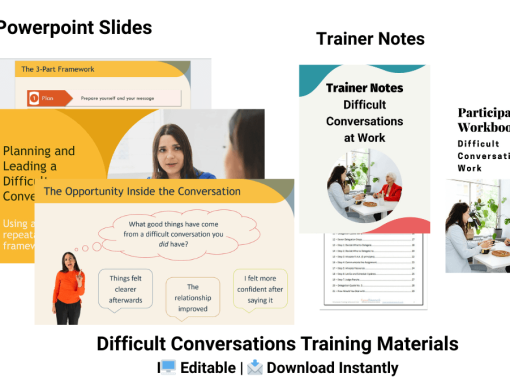
A session plan is the starting point for a communication skills workshop. However, trainers still need to design slides, create activities, write role-play scenarios, prepare trainer notes, and develop participant handouts. This is often the part that takes the most time.
The session plan helps you structure the workshop, but the training materials are what make the session engaging and professional.
Related Communication Training Activities
If you are planning a communication skills training session, you may also find these communication training activities useful:
• Communication icebreakers
• Communication role-play scenarios
• Communication skills activities
• Nonverbal communication activities
• Presentation skills activities
• Intercultural communication activities
These activities can be combined into a complete communication skills training session using the communication training session plan template.
Need Ready-to-Use Communication Skills Training Materials?
Need Ready-to-Use Communication Training Materials?
If you want to run a workplace communication workshop without creating everything from scratch, explore our editable trainer-led course materials.
View Communication Skills MaterialsThis free communication skills training session plan template helps you structure a communication workshop. However, designing a full communication skills training course — including PowerPoint slides, trainer notes, participant handouts, activities, and role-plays — can take many hours.
If you need ready-to-use communication skills training materials, you can explore our range of editable communication skills training kits, which are designed for trainers, HR professionals, managers, and facilitators who want to deliver structured and professional communication skills training without creating everything from scratch.
View our range of Communication Skills Training Materials.