
Paraverbal communication is the non-verbal aspects of speech—such as tone of voice, pitch, pace, volume, and vocal quality—that influence how a message is interpreted. Unlike body language, paraverbal communication focuses on how something is said rather than physical gestures.

What is Paraverbal Communication?
You might be familiar with non-verbal communication and body language and be wondering what paraverbal communication You might already be familiar with body language and non-verbal communication, but paraverbal communication is often less well understood. While body language focuses on physical movements and gestures, paraverbal communication refers to the vocal elements of verbal communication that influence how your message is received.
For example, if we cross our arms while speaking, listeners may consciously or subconsciously interpret us as defensive or guarded. That’s body language. Paraverbal communication, by contrast, is about how we speak rather than the physical movements we make.
It includes:
- Tone of voice
- Pitch
- Volume
- Speech rate (for example, speaking very quickly can suggest nervousness)
- Vocal quality and resonance
Together, these vocal characteristics influence how trustworthy, confident, approachable, or authoritative we appear in workplace conversations.
Why is Paraverbal Communication Important in the Workplace?
In the workplace, understanding paraverbal communication can be invaluable because it is a way in which we can learn and work toward being a more effective manager.
Great communication at work impacts your ability to:
- Manage conflicts between employees
- Get the team to work together more effectively
- Lead with authority as a manager and with respect
Effective paraverbal communication is about conveying the emotions and intent behind what you are saying in a way that builds trust, clarity, and understanding.
For example, using a calm and steady tone can help promote trust, while a rushed or monotone delivery might suggest disinterest or anxiety.
Understanding and correctly using paraverbal cues can help you build clarity, reduce misunderstandings, and build better workplace relationships.
5 Components of Paraverbal Communication
Having discussed what paraverbal communication is, it is worth looking at some of its components.
- The tone of Voice: When you speak, the tone of your voice provides cues as to your emotional state and attitude. For example, a friendly and warm type of tone can create a positive vibe and create a positive impression.
- Pitch: Using a high or low pitch can influence how statements are perceived by the listener. The pitch might, for example, portray a sense of urgency or calmness.
- Volume: Speaking too softly might sometimes suggest a lack of confidence. In contrast, an excessively loud volume can often be perceived as being aggressive.
- Speech Rate: A steady pace can communicate clarity and confidence, while a fast rate can sometimes indicate stress or impatience.
- Vocal Quality: Components such as clarity, resonance, and enunciation all affect how effectively a message is delivered.
How Paraverbal Communication Impacts Workplace Dynamics
Team unity and workplace dynamics are important, and paraverbal communication plays a significant role in this unity.
The paraverbal influences tend to determine and greatly influence whether interaction ends up being effective or problematic (and the problems getting worse).
1. Leadership
Leaders (managers) who understand and use paraverbal communication well tend to be good motivators and are good at inspiring their team.
A confident tone and controlled pace help you convey a sense of authority while showing empathy and understanding.
Gentle modulation of your voice and volume will help you achieve this.
2. Team Collaboration
Good communication in team meetings is important given that these meetings can set the tone for daily and weekly work schedules.
Using a balanced pitch and moderate volume is a good target.
When addressed in an encouraging and non-intimidating manner, employees tend to be more relaxed and to participate and join in more.
This does not mean that you cannot use excitable and sometimes tough pitches to get across important information, but generally speaking, consistency and a good balance are good.
3. Conflict Resolution
Paraverbal cues can be really important for diffusing workplace conflicts.
A softer tone and slower speech rate can help reduce tension and promote a problem-solving atmosphere.
Examples of Paraverbal Communication in Workplace Scenarios
| Aspect | Description | Key Impact |
| Tone of Voice | Reflects emotions and attitude | Builds trust, sets emotional tone |
| Pitch | High/low voice modulation | Conveys urgency or calmness |
| Volume | Loudness of speech | Signals confidence or aggression |
| Speech Rate | Speed of speaking | Shows clarity or stress |
| Vocal Quality | Clarity, resonance, enunciation | Affects message effectiveness |
| In Leadership | Inspires and guides teams | Enhances motivation and clarity |
| In Emotional Intelligence | Improves self-awareness and empathy | Strengthens workplace relationships |
| In Conflict Resolution | Use a calm and controlled voice | De-escalates tense situations |
| Common Pitfall: Monotone | Lack of vocal variation | Can appear insincere or disinterested |
How to Improve Paraverbal Communication Skills
The good news is that you can certainly work to improve your communication skills, and here are some pointers:
- Practice Active Listening: This helps in matching the appropriate tone and volume when responding. Actively listening to others is also a great way to begin to become more consciously aware of things such as pitch and tone and how they affect the words being spoken.
- Control Your Breath: It can be worth learning how to breathe in such a way that you can speak while maintaining a steady, relaxed, and calm voice.
- Record and Self-Assess: Listening to recordings of your own voice in different situations and reading different types of text can be a great way to become more aware of your own communication style and patterns.
Paraverbal Communication and Emotional Intelligence
Emotional intelligence (EI) is essential in the workplace, especially for managers.
Being able to see situations from the perspective of your employees and to be able to understand what motivates them and how to create a strong emotional connection with them as a manager helps you manage them more effectively.
Paraverbal communication interestingly plays a significant role in emotional intelligence because both involve one’s ability to express oneself well and to interpret other people’s emotions.
The two also share the following attributes:
1. Self-Awareness
Having high emotional intelligence begins with self-awareness.
By being mindful of how your voice sounds and comes across to others, whether it is as someone who is calm, enthusiastic, or tense, you can begin to better understand how your emotions may be perceived by others.
People with high EI often adjust their paraverbal cues to match the context and emotions they intend to convey, avoiding miscommunication.
2. Self-Regulation
Managing your own vocal expressions, such as keeping a steady and controlled tone even under stress, is a sign of strong self-regulation.
This can prevent unintentional escalation in difficult conversations and maintain a professional demeanor.
This is not to suggest you should be unemotional, but to manage these emotions in a positive way.
3. Social Awareness
Social awareness involves accurately interpreting the emotions of others – not an easy thing I will admit!
But paraverbal cues are powerful indicators of how someone feels beyond the words they use.
For example, a colleague speaking in a soft, hesitant tone may need support, while a raised pitch might signal excitement or stress.
Recognising and understanding these signals better equips you to show empathy and respond accordingly.
4. Relationship Management
Effective management involves developing strong workplace relationships.
Whether you are giving feedback, negotiating, or resolving conflicts, adopting a warm and steady tone during performance reviews can help maintain a positive rapport and foster trust.
Overall, understanding paraverbal communication contributes to higher emotional intelligence by improving both self-expression and the ability to connect with and support others effectively.
This guide is part of our Workplace Communication Guides.
FAQs
What are examples of paraverbal communication?
Tone of voice, pitch, speaking pace, pauses, volume, and vocal quality are all examples of paraverbal communication. These influence how listeners interpret your message even when the words remain the same.
Can paraverbal communication be improved?
Yes. Practicing active listening, recording yourself speaking, improving breath control, and becoming more aware of your vocal delivery can all strengthen your paraverbal communication skills.
Why do managers need good paraverbal communication skills?
Managers use paraverbal communication every day when giving feedback, leading meetings, resolving conflict, and motivating employees. Appropriate tone, pace, and volume help build trust and improve workplace relationships.
Final Thoughts
We discussed what paraverbal communication is and looked at some examples and the core components.
Improving your paraverbal communication skills can lead to you being a more effective manager and communicator.
Mastering paraverbal communication is not just about avoiding misunderstandings but also about actively shaping positive interactions and fostering a culture of openness and respect.
With practice and awareness, anyone can develop these skills and make a long-term impact in their workplace.
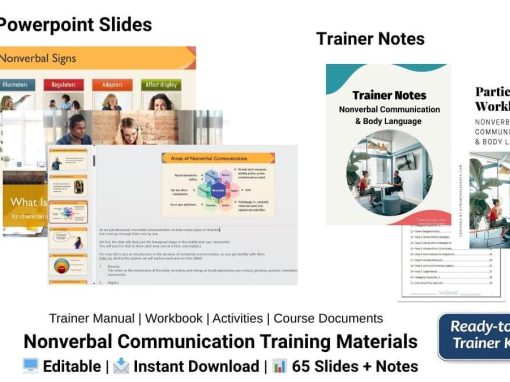
Nonverbal Communication & Body Language Training Materials
Looking for ready-to-use training materials? Our fully editable trainer toolkit includes PowerPoint slides, trainer notes, participant workbooks, exercises and activities for delivering engaging workplace communication training.
View Training Materials →


