
Being criticized unfairly at work is never a pleasant experience, and it can be difficult at first to know how to respond in an effective manner. The best way is to keep your emotions under control, then consider and reflect on whether the comments are fair or perhaps unreasonable, and then reply but in an assertive rather than a defensive manner. This process can usually help you prevent the situation from escalating.
There are techniques that you can use to respond to and deal with criticism positively, and these techniques and tips are explained below.

How to Handle Unfair Criticism at Work
• Stay calm before responding
• Decide whether the criticism is fair
• Ask questions to clarify the issue
• Respond assertively rather than defensively
• Focus on the facts instead of the emotion
What if the criticism is actually fair?
If you recognize that the criticism is fair and true, then you might simply accept it and take responsibility.
In a work situation, your manager or whoever is criticizing you might feel that it is the only way to make you aware of the situation.
It might also be that the critic could be more constructive and diplomatic, but if it is fair criticism, there is rarely any point in fighting it.
How do you handle unfair criticism at work?
1. Disagreeing
If the criticism is inaccurate, calmly and confidently explain why you disagree without becoming defensive or confrontational.
If you do not think that the criticism is fair, you can simply disagree with it. The key, in this case, though, is to maintain a confident and calm body language and voice.
You do not want to come across as aggressive or passive.
For example, if someone accuses you of always being late but you know it isn’t true, you can reply ‘No, I’m not always late. I might be late occasionally, but I’m certainly not always late.’

Slide from our Assertiveness Training Materials: How to handle unfair criticism at work
2. Negative Enquiry
When criticism is unclear, ask polite questions to understand exactly what the other person means and whether there is any useful feedback to take away.
This technique involves asking questions to find out more about the criticism, to assess if it is valid, and what points you might need to address.
For example, if someone says to you, ‘The report you wrote was dreadful,’ you can reply by asking, ‘What exactly did you find dreadful about it?’
This technique has a positive equivalent for receiving compliments assertively.
For example, if someone says to you, ‘The report you wrote was amazing,’ you can reply by asking, ‘Thank you. I’m glad you liked it. What did you like the most about it?’
3. How Does the Fogging Technique Help You Handle Unfair Criticism?
Fogging helps you respond to criticism by acknowledging any truth in the comment while refusing to be drawn into an argument.
This technique is useful when you receive unfair or manipulative criticism, and you want to avoid reacting aggressively (and getting into an argument) or passively (feeling bad about yourself and giving in to any request, as you feel guilty).
The fogging technique (so-called because you put up a wall of fog into which arguments are thrown but not returned) serves to diffuse a situation.
The technique consists of agreeing with any truths that may be contained within a statement or phrase while ignoring other aspects of the criticism.
You can agree in one of three ways, which are:
- in part
- in probability
- and in principle.
You agree in part when you recognize that in the statement there is a bit of truth.
For example, someone says, ‘You are late, you are absolutely useless at keeping to your word, and I can never rely on you ’, and you can reply, ‘Yes, you are right in saying that I am late this time’.
Another example might be, ‘This report is all over the place, you are useless at your job,’ and you reply, ‘Yes, I could have structured this report a bit better’.
You agree in probability when you don’t agree with the criticism, but you admit that there may be a possibility, however remote, that the critic might be right.
For example, ‘If you use provider X instead of Y, you will not get the order delivered on time,’ and you reply, ‘You are right, the order may not be on time’.
You agree in principle when you disagree with the criticism, but you admit that the logic might be right.
For example, ‘You should have that spreadsheet checked by somebody else, as there may be mistakes,’ and you reply, ‘You are right, it is useful to have one’s work double-checked for mistakes by other people sometimes.’
When you use fogging, it is important to listen carefully to what the other person is saying, so you can choose what to agree with.
Also, you need to keep a calm and relaxed demeanor; otherwise, you can come across as sarcastic and mocking.
Try to keep detached by not letting any personal element of the criticism annoy you, and don’t respond by criticizing the other person.
Also, don’t deny any criticism that you receive, and don’t get drawn into doing something you don’t want to do just because the other person thinks you should.
In addition to the techniques we have discussed, remember the following tips when handling criticism.
4. Relax and Listen
Listening carefully before reacting helps you judge whether the criticism is fair, exaggerated, or completely unfounded.
We all handle criticism at work in a different way, but one step we can all take is to keep calm and listen carefully to what the other person is saying.
This is the only way to decide if the criticism is fair or just destructive, if there is some truth in it, and how to respond.
Some people fail to listen and jump to conclusions, whereas the criticism really might not be as bad as you otherwise think when you do not listen.
Learning to be a good listener will make you far more appreciated and likable at work because being listened to is something that most of us value.
5. Respond to the Content, not the Tone
Focus on the facts being communicated rather than the emotion or delivery, so you can respond professionally rather than emotionally.
Only consider what is being said. Try to ignore the tone, if it is aggressive or sarcastic, for instance.
Separate the issue from the emotional elements.
In other words, there is no point in you getting stressed even if the critic is.
6. Don’t Respond Immediately
Taking a little time before replying reduces emotional reactions and helps you give a more thoughtful response.
Take time to think, if needed, to avoid saying something you might regret.
In most situations, we have the time to consider the criticism, especially when we work with colleagues we see every day.
The old adage that we should sleep on it, meaning take a day to consider it, is always an extremely good idea when it comes to handling criticism.
7. Ask the Critic Questions to Better Understand
Clarifying questions help you uncover the real issue and identify whether the criticism contains constructive feedback.
As we mentioned before concerning the negative inquiry technique, delve into the criticism by asking questions to the critic so that you can better understand the validity or not of the points made.
This is particularly useful if you think that beneath it all there might be some useful feedback to be had.
If you’re a manager, you may also find our guide to the Feedback Sandwich Technique helpful when delivering constructive criticism.
How should you answer interview questions about handling criticism?
1. How Do You Answer – How Do You Handle Unfair Criticism in the Workplace?
A popular question in job interviews that comes up time and time again is the question of how you would deal with unfair criticism in the workplace.
This question understandably helps interviews to assess how you might fit into a team and how you might deal with your colleagues.
The best way to answer this question is to offer constructive ideas such as those used in the tips above. So, just to reiterate:
- Relax and listen
- Respond to the content and not the tone
- Take time to respond
- If needed, ask questions to better understand the points being made to you
- Work out if the criticism is fair, and if so, accept it
- Do not get sidelined, and don’t bring up other issues and personal grievances
2. How Would You Ignore Criticism at Work?
The answer I suggest giving if asked in an interview how to avoid criticism is to explain that you don’t.
Rather than ignoring it, it is best to use one of the techniques discussed above, i.e to either:
- Accept the points made
- Disagree (but politely) with the criticism
- Use the negative inquiry technique
- Or use the fogging technique
3. What Does It Mean to Handle Criticism Positively?
A lot of the time, when criticism is made, it is not intended as a personal attack, and understanding this can be important.
To handle it all positively, you will:
- Avoid any personal attacks on the person in response
- Take time to consider fairly the criticism made
- React in a considered and positive manner in reply to the critic
This guide is one of our Communication at Work Guides hub.
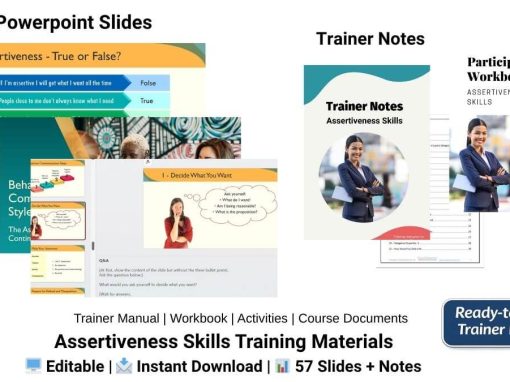
See the Assertiveness Training Materials
- Fully editable PowerPoint slides
- Trainer Notes & participants guide
- Printable participant workbooks, handouts & activities inthe PPTs
Many of the techniques discussed above are based on assertive communication. If you’d like to develop these skills further, see our guide on How to Teach Assertiveness Skills in the Workplace.
FAQs
What are the effects of constant criticism at work?
The effects include:
1. Drop in employee and team morale
2. High rates of employee turnover
3. Drop in productivity and efficiency
4. The company might gain a bad reputation as a poor place to work
5. Lack of innovation and willingness to take any risks
What is an example of unfair criticism at work?
Your manager has handed you far more work than it is realistic or fair to ask you to do. As a result, you deliver poorer results because you simply lacked enough time. It would be unfair to blame you.
What to do if your manager unfairly criticises you too often?
If you find that your direct manager is often highly critical of you and borderline bullies you, consider talking directly with the HR (Human Resources) department. Alternatively, you might be able to talk to the union if you have one.


